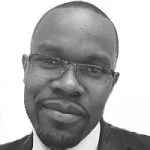

Parts of this story may trouble science; other parts may test the limits of what you believe faith can achieve. I will leave that debate to those who can afford it. For me, the mystery is that I can see the keyboard on which I am typing this.
DIGGING FOR SCHOOL FEES:
I was raised by a single mother. Legend has it that my father was wealthy and influential local figure in Kaunda’s UNIP who died in 1984, when I was just over a year old. How his family eventually found itself negotiating with poverty is a story that l can only tell probably after consulting the National Archives.
By the time I attained the age of reason, my mother was a primary school teacher, moving from one rural settlement to another in Eastern Province. And before my surname starts a separate investigation: yes, Mwenda is common in Southern, Western and Northern provinces, and even Kenya. But I am a Nsenga with pedigree from Chieftainess Mwanjabathu.
So, I grew up in a household without electricity or tap water. Let me emphasise the electricity part: ours was loadshedding by factory settings. There was no schedule.
But we were happy, my two sisters, two brothers and I. If you haven’t been exposed to certain privileges and necessities, you don’t know how painful it is not to have them. If you have never opened a tap, you do not feel deprived.
Between 1990 and 2002, we cultivated other people’s fields to raise money for school. Our fees were buried somewhere in that soil, and we had to dig them out.
In fact, we went to boarding school in shifts; like chilimba. If you reported first this term, next term you remained with the hoe until your siblings had all taken their places behind desks. Education was a family relay: someone had to stay in the field so that someone else could enter a classroom.
In seasons when there was no farm work, we sold everything from chickens to the rice we had learnt to cultivate. My mother’s salary stretched only as far as cooking oil, soap and ma spokes ya njinga – our most priced family asset.
SHOOTING WITH A PEN FROM CHILDHOOD
Kudala, even our dreams understood the household budget. When they asked what I wanted to be, “soldier” was the correct answer.
Doctor??
How? Sponsored by who?
In my extended family, bread winners were teachers and nurses. A soldier would win the entire bakery, I imagined and I prepped myself for military. But somehow, destiny pushed me towards news.
As Editor in Chief for the school writers magazine “Voice of Chassa”, I was that fellow who unpacked the news stories published in The Post newspaper in the late 90s and 2000.
Before I met one Fred M’membe in 2006, I had already encountered his pen, including one famous editorial opinion, “A President cannot hide his stupidity behind Section 69” (a reference to the repealed Penal Code provision that outlawed defamation of the President). I found reading news and explaining it to others more entertaining than Chemistry books.
There were no cell phones in our world, let alone social media. I had no television at home and no radio at school. So, current affairs reached the school in hard copy, and I wanted to know everything printed on every page of that A3. It was my job to narrate news developments with my pen using the school notice board. I made a strategic friendship with our school librarian Enock Dube, whose young brother happens to be employed at News Diggers (small world). Dube allowed me extra access to the newspapers.
If I tell you that I hated boarding life, I will be serving you a half-baked story. I longed for holidays because I missed my siblings and the family union. But for me, Chassa Boys Secondary School was, in many respects, softer than home.
It was a proper Catholic school. No running between hostels and classrooms. No eating with your fingers; cutlery was compulsory. They actually forced you to eat. Missing a meal “ku dingo” was a punishable offence. Coming from a home where we worked so hard to put food on the table, and going to an institution that punished you for not eating was like a vacation. If I had the genes for getting fat, that would have been the time.
And there was electricity in boarding. At home, paraffin belonged on the household shopping list. A candle was an upgrade, the sort of luxury a civil servant like my mother could afford. It was actually one of those candles that sent me reaching into a kind of darkness that I would spend the next three decades learning to live with.
“PE LAMPI” WITHOUT POLITICAL AFFILIATION:
This is where the tyre meets the tarmac. As the last-born, I was the household’s walking delivery service. While everyone else enjoyed the moonlight outside, I could be sent indoors by anybody who remembered something they needed. As I mentioned, I never knew a switch for electricity, growing up. In our house, it was “pe lampi” without political affiliation. One evening, my older sister Rhoda sent me to light the candle we kept on top of a wooden display unit.
Inside the house, darkness had swallowed the furniture. So in fumbling for the candle, I knocked it over and heard it fall behind the furniture. An ordinary domestic inconvenience with a simple solution; move the unit, retrieve the candle, strike a match.
I pulled the display away from the wall, leaving just enough room to squeeze in my head and right hand.
Unbeknown to us, one of the most venomous snakes common in the area had invited itself into our living room and found the warmth which I was just about to disturb.
A spitting cobra is generally a non-aggressive snake and prefers to flee rather than fight. I know this because we encountered these ‘guys’ at the farms quite regularly. But I startled this one with my touch.
I felt a drizzle of “water” on my face.
But curiosity got me bending closer, trying to establish why the “candle” beneath my fingers felt softer and larger than a candle had any business being.
This was it; target locked!
In an instant, my world went black. Then came the fire in my eyes.
The next few minutes dissolved into wailing and prayer. Rhoda, then the most prayerful of my siblings, held my hands and we prayed while the others traded desperate myths they could remember around “what to do when a cobra spits in your eyes”. In that confusing and traumatising hour, I punctuated the pain with the agonising thoughts of how I was never going to see my family again or read another newspaper at school.
My mother had only recently been transferred to rural Nyampondolo Primary School. There was no proper health facility nearby. After delayed attempts to wash away the venom, we were left with little to do but wait, pray and fear the answer.
That night seemed to have no morning. The days that followed were spent in relentless prayer. Slowly, the world returned. Reluctantly, shapes began to emerge from the darkness, blurred but recognisable. Some months later, I learnt that the damage was severe but somehow, I had retained a good proportion of my sight. It was the first miracle. It was enough to continue with life, and the next three decades were an exercise in acceptance. Then age began adding its own demands on my vision. But God had another chapter coming.
A BLIND EDITOR-IN-CHIEF? I DIDN’T SEE THIS COMING
I joined The Post newspaper late in 2006 and wrote various stories on practically every desk; sports, business, court, politics and entertainment. I actually accomplished some great photography too. One day, opticians from Vision Care visited the company to conduct a check on the employees.
“How are you even managing to work?” A gentleman testing my eyes asked, confused to see my case aggravated by myopia. I was the worst candidate out of everyone they checked that day. He went on to prescribe some glasses for the small improvement they could make, but advised that I needed special attention.
I started using glasses and soldiered on, still not able to see clearly. There were stories to chase, deadlines to meet and bills that had no interest in my medical history.
When The Post closed in 2016, I established News Diggers that same year. Ten years later, I have written more than 2,500 editorial comments, spending countless hours in front of a computer, reading, writing and pushing files. The eyes that survived the cobra carried me through all of it.
But after 20 years in mainstream journalism, my sight began deteriorating sharply. It was giving up. This year, as months went by things got so bad that it started affecting my work. Eventually, I stopped going to News Diggers regularly.
I didn’t see this one coming. A blind Editor-in-chief. While downplaying the situation for social and political reasons, I resolved not to give up.
I addressed my managers and editors in an emotional meeting as I disclosed that I would be going for eye surgery. I prepared them for the worst.
At this point I must mention this; the family that had surrounded me on that frightening childhood night had itself been threatened by extinction. In a space of five years, my siblings passed, one after another. My mother stayed but later succumbed to cancer in 2010. Of all my siblings, only one brother, Mophat, now plying his trade in Sinda, remains.
You grow up thinking the people who know the beginning of your story will always be there to help you tell it.
I would soon learn that family is also made along the way and extends beyond blood. When I started mobilizing resources, brothers and sisters gained through my professional life who learnt about by situation came through for me. They helped me finance what I can only describe as very expensive eye surgery in the UK.
So, recently, I took a trip and went to gamble with science, knowing too well that if the procedure went wrong, I would never see again and I would have brought forward my doom.
Top of my worry was my ka wife guys. I wondered whether after saying “until death do us part” she would still choose to stay if my world went permanently dark. She loves complements too much, and for some reasons she doesn’t seem to trust her mirror. If things went wrong, her “how do I look” would be followed by ; “oh sorry babe, I forgot that you…”
FAITH MEETS SCIENCE
Anyway. London’s Moorfields Eye Hospital is the world’s oldest specialist eye hospital and Europe’s biggest ophthalmic treatment and research centre. Even those credentials could not quiet my fear. True to my anxiety, the doctor warned: “After we do this procedure, you will be cursing me for a few days and you will have thoughts of regret, but it will be totally worth it,” he said. He was right about the first part. In fact, his words were an understatement.
For the first three days after surgery, I endured the most excruciating pain I have ever known. Antibiotics gave me frightening heart palpitations. “Pain control” drugs seemed to worsen things. The numerous eye drops, administered every 15 minutes, just completed the scenery of hell.
For three days, I was blind. But even that does not adequately describe how I felt. The faintest blade of light sent pain stabbing into my head. The room had to remain pitch-black, at every hour.
There was no sunrise, no sunset, no clock I could read. Just sitting, waiting for 72 hours to crawl past. In that darkness, I reflected on many things. I thought about the boy behind the display unit. I thought about how much of my life I had built around reading and writing. I thought about my law school. Then I thought about people who navigate the world without sight, every day, without a doctor’s assurance that things should improve by the end of the week. Let me just say: I owe the Zambia National Federation of the Blind a visit and a grand donation.
MWIZUKANJI, THE WEEPING BEDSIDER:
My wife is a comedian who missed her calling. On those happy days when I would seek her help looking for my glasses which were actually perched over my forehead, she would fondly and mockingly call me ‘Bartimaeus’. After the surgery, she tried to bring that jovial mood into the ordeal.
“Don’t worry my love, I’ll tell the president that my husband is now eligible for proportional representation kuno” she joked.
She tried her best and reassured me that everything would pass, but pain had temporarily dismissed my sense of humour.
Little did I know that after encouraging me, she would go into her corner to cry her eyes out.
During the three days of horror, I developed an intense feeling of claustrophobia. I could not tolerate sound. Even ordinary noises made me restless. Light hurt. Sound unsettled me. The room that protected my eyes had begun to feel like a prison. And she was there, trying to care for a man whom almost nothing could comfort.
Only now, as I listen to her describe this order from her perspective do I fully appreciate the other side of that dark room. Let me simply say I married a strong and intelligent woman.
MY WORD TO BOMA
I believe Zambia can and must invest more in specialised eye care, not merely by expanding facilities and acquiring modern equipment, but also by training specialists and working closely with organisations such as Sightsavers Zambia to make these life-changing medical services accessible to ordinary citizens. I appreciate that not every eye condition can be cured, and certainly not every patient can afford to travel abroad in search of treatment. But surely, where medical science offers a chance to save someone’s sight, neither poverty nor the absence of specialised facilities should be allowed to extinguish that hope in the miracles that modern medicine has already made possible.
Today, I tell this story as a testimony. I believe God did it. Science? Well, definitely yes. Science did too. I have no difficulty thanking God and the people whose knowledge and skill helped restore my sight. I can see the world again.
MORAL OF THE STORY
Faith without action is nothing, and action without faith is equally worthless.